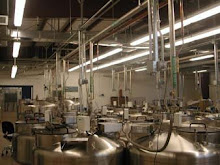
Cryogenic freezing can certainly be dangerous. That's why we provide the best-quality cryogenic equipment possible to ensure the safety and effectiveness of all cryogenic freezing systems.
With our products you can avoid problems and fines like one large frozen pizza company who was cited for nine alleged safety and health violations. Of course, most of the fines were of a result of neglect of the company, but you can make the cryogenic freezing process easier with our products.
One of the citations was a violation of exposing workers to an oxygen deficient atmosphere.
"Employers are responsible for knowing the hazards that exist in their workplace and training workers in proper safety precautions such as air monitoring and respirator use," said Kim Stille, director of OSHA's Madison Area Office. "OSHA is committed to protecting workers, especially when employers fail to do so."
The fines totaled $76,300 after OSHA initiated an inspection of the pizza company's plant in June. The violations were issued when workers were exposed to an oxygen deficient environment during the freezing process of the pizzas in a liquid nitrogen cryogenic freezer. The cryogenic freezer created a hazardous environment due to the buildup of nitrogen gas; however, no injuries or illnesses were reported as a result of the conditions.
Other fines focused on the lack of training and implementation of safety equipment. These fines can greatly hurt any company that uses cryogenic equipment. That's why we, at Princeton Cryo, think it's important to use the best equipment in the market. We strive to create a safe environment no matter what the use of the cryogenic freezer.
Thursday, February 2, 2012

Tuesday, January 31, 2012
The Useful But Dangerous Liquid Nitrogen
We've all heard the uses of liquid nitrogen and its unique properties that help scientists around the world discover new and amazing things. However, without the proper liquid nitrogen equipment and other precautions, the substance can quickly become very dangerous to those around the substance.
Recently, an astrophysicist in Egypt was cooling a charged coupled device camera for the observatory's telescope. He was carrying a cryogenic storage vacuum flask of liquid nitrogen which was to contain the heat coming off of the camera. The flask exploded, giving the astrophysicist severe chest and hand cold burns from the bursting liquid nitrogen.
Liquid nitrogen transfers to nitrogen gas of a rapid ration of 1:694, which is why the substance exploded. If you pour two gallons of liquid nitrogen into any warm vacuum it suddenly and immediately evaporates into a gas in front of your eyes. The properties of the substance are very dangerous for those who are unfamiliar with the safety precautions or liquid nitrogen equipment.
The gas is used for observatory and lab work but is more commonly used in refrigeration. Foods and goods can be transported around the world with the use of cryogenic storage. Liquid nitrogen is also vital in the cryopreservation of blood, reproductive cells and other biological samples.
It's also used in low temperature medical treatment in some dermatology cases. Also, construction companies may be able to use liquid nitrogen to freeze damaged water pipes and stopping water leaks during the fixing process. In the military, liquid nitrogen is used in heat-seeking missiles to prevent sensors from getting confused by their own heat signals or by the heat form the planes that are launching them.
There are so many applications of liquid nitrogen, but you need the proper liquid nitrogen equipment to ensure that the safety of everyone is preserved.
Recently, an astrophysicist in Egypt was cooling a charged coupled device camera for the observatory's telescope. He was carrying a cryogenic storage vacuum flask of liquid nitrogen which was to contain the heat coming off of the camera. The flask exploded, giving the astrophysicist severe chest and hand cold burns from the bursting liquid nitrogen.
Liquid nitrogen transfers to nitrogen gas of a rapid ration of 1:694, which is why the substance exploded. If you pour two gallons of liquid nitrogen into any warm vacuum it suddenly and immediately evaporates into a gas in front of your eyes. The properties of the substance are very dangerous for those who are unfamiliar with the safety precautions or liquid nitrogen equipment.
The gas is used for observatory and lab work but is more commonly used in refrigeration. Foods and goods can be transported around the world with the use of cryogenic storage. Liquid nitrogen is also vital in the cryopreservation of blood, reproductive cells and other biological samples.
It's also used in low temperature medical treatment in some dermatology cases. Also, construction companies may be able to use liquid nitrogen to freeze damaged water pipes and stopping water leaks during the fixing process. In the military, liquid nitrogen is used in heat-seeking missiles to prevent sensors from getting confused by their own heat signals or by the heat form the planes that are launching them.
There are so many applications of liquid nitrogen, but you need the proper liquid nitrogen equipment to ensure that the safety of everyone is preserved.
Tuesday, January 3, 2012
We Stand By Our Products With a 100 Percent Guarantee
We at PrincetonCryo.com believe in valuing our customer's satisfaction with all of our products. We offer a first-rate customer service that can help your needs, which can prove invaluable in the world of cryogenics.
We offer top of the line cryogenic equipment to help you build the best cryogenic storage system on the market. PrincetonCryo.com provides industry-leading cryogenic design and engineers that are instrumental in creating the most well-renowned equipment in the world. Our engineers are experience and well trained to design and install all of our cryogenic equipment.
Because we have set a high bar for ourselves and have earned the reputation as a reliable, high-quality leader in the cryogenic industry, we know that all of our customers will have 100 percent satisfaction.
If you do not have 100 percent satisfaction, we adhere to a "No Hassle" return policy where we'll make sure your cryogenic equipment is working correctly or you'll get your money back. So if you're in the field that needs cryogenic storage equipment then look no further than PrincetonCryo.com, we guarantee you'll be satisfied.
We offer top of the line cryogenic equipment to help you build the best cryogenic storage system on the market. PrincetonCryo.com provides industry-leading cryogenic design and engineers that are instrumental in creating the most well-renowned equipment in the world. Our engineers are experience and well trained to design and install all of our cryogenic equipment.
Because we have set a high bar for ourselves and have earned the reputation as a reliable, high-quality leader in the cryogenic industry, we know that all of our customers will have 100 percent satisfaction.
If you do not have 100 percent satisfaction, we adhere to a "No Hassle" return policy where we'll make sure your cryogenic equipment is working correctly or you'll get your money back. So if you're in the field that needs cryogenic storage equipment then look no further than PrincetonCryo.com, we guarantee you'll be satisfied.
Wednesday, December 21, 2011
Types of biological materials that can be held in Cryogenic Storage
Cryogenic storage is very helpful when storing biological materials. Because a cryogenic freezer can freeze things at -150 degrees Celsius (refrigerated storage is about 5 degrees Celsius and typical freezer storage is about -20 degrees Celsius), it can store many biological materials without letting them go bad.
Some of the biological materials that can be stored are:
- Blood
- Plasma
- Bone
- DNA
- RNA
- Explant device storage (hips, mesh, etc.)
- Tissues and cell lines
- Agro and plant samples
- Pathology and legal specimens
- Stem cells and cord blood
- Fluids and urine
- Clinical supplies
- Serum
- Slides
This is just some of the things that can be held in cryogenic storage. The control of the temperature of valuable biological materials is very important. From storing sperm samples, blood samples to even ways of storing food, cryogenic freezing is one of the best ways to ensure pristine preservation.
Labs that have cryogenic freezers are more likely to have more beneficial biological samples and have more accurate tests for blood, DNA or other animal tissues. Thanks to cryogenic storage, biological materials can be held for a long time and won't spoil or deteriorate. This is important in guaranteeing to those who need biological specimens preserved.
Some of the biological materials that can be stored are:
- Blood
- Plasma
- Bone
- DNA
- RNA
- Explant device storage (hips, mesh, etc.)
- Tissues and cell lines
- Agro and plant samples
- Pathology and legal specimens
- Stem cells and cord blood
- Fluids and urine
- Clinical supplies
- Serum
- Slides
This is just some of the things that can be held in cryogenic storage. The control of the temperature of valuable biological materials is very important. From storing sperm samples, blood samples to even ways of storing food, cryogenic freezing is one of the best ways to ensure pristine preservation.
Labs that have cryogenic freezers are more likely to have more beneficial biological samples and have more accurate tests for blood, DNA or other animal tissues. Thanks to cryogenic storage, biological materials can be held for a long time and won't spoil or deteriorate. This is important in guaranteeing to those who need biological specimens preserved.
Tuesday, December 20, 2011
Handling Liquid Nitrogen and Liquid Nitrogen Equipment
Handling liquid nitrogen and liquid nitrogen equipment can be very dangerous, so there will be a need for extreme precaution for everyone who is involved. Liquid nitrogen is a dangerous material that can cause burns and loss of oxygen levels in the air. For example, if a 10 liter dewar is spilled in an unventilated 274 square foot room with an 8 foot ceiling, the oxygen levels would reduce to 19.5 percent. There would be a need for air respirators. Of course, this is a small room and most labs and classrooms are much larger and the oxygen levels should remain relatively high during a spill. However, when transporting the liquid nitrogen and liquid nitrogen equipment in a truck or van is a different story.
But suffocation isn't the main problem with liquid nitrogen and liquid nitrogen equipment. Freeze burns are a much more serious danger. This will cause the greatest concern when building an LN2 freezer.
These are the things that you should be worried when dealing with liquid nitrogen:
- Splatters, especially in eyes, while pouring
- Flying pieces of frozen objects
- Touching the nitrogen or other cold objects
So it's important to stress several precautions which include no touching and the use of goggles. Whenever pouring liquid nitrogen, it can splatter or spew out frozen pieces. It's also important to wear gloves and use tongs to handle any object that is being placed in or out of liquid nitrogen.
When handling liquid nitrogen and liquid nitrogen equipment, it's important to ensure safety to avoid any possible injuries.
But suffocation isn't the main problem with liquid nitrogen and liquid nitrogen equipment. Freeze burns are a much more serious danger. This will cause the greatest concern when building an LN2 freezer.
These are the things that you should be worried when dealing with liquid nitrogen:
- Splatters, especially in eyes, while pouring
- Flying pieces of frozen objects
- Touching the nitrogen or other cold objects
So it's important to stress several precautions which include no touching and the use of goggles. Whenever pouring liquid nitrogen, it can splatter or spew out frozen pieces. It's also important to wear gloves and use tongs to handle any object that is being placed in or out of liquid nitrogen.
When handling liquid nitrogen and liquid nitrogen equipment, it's important to ensure safety to avoid any possible injuries.
Monday, November 7, 2011
Using Cryogenic Freezer Systems to Preserve Fruits and Vegetables
When people think of cryogenic freezer systems or cryogenically freezing things, they immediately think of freezing dead bodies to preserve them for the future. However, cryogenics have advanced way past common science fiction plot lines. In actuality, cryogenics help us with every-day life.
Many food distributors use cryogenic freezing to preserve fruits and vegetables. Freezing preservation is important in retaining the quality of agriculture products over long storage and shipping periods. As methods of long-term preservation of agricultural products, freezing is far superior to canning and dehydration in regards to retaining taste and nutrient properties. Cryogenic freezing is cheaper than the dehydration or canning process, while using up less resources and time. When the overall cost is considered, freezing is the most cost-effective of any method of food preservation.
The frozen food market is one of the largest and most diverse sectors of the food industry. From TV dinners to frozen strawberries, the frozen food sector has a value of more than $27.3 billion in the United States alone. To keep this business alive, cryogenic freezer systems have played a large part in the refrigeration of food products. The success of cryogenic freezing comes from the elimination of heat from low temperature points towards points with higher temperatures. The cryogenic system achieves this through the use of liquid nitrogen and carbon dioxide to keep the products frozen and unable to spoil.
Remember the next time you go grocery shopping, there's a chance that some of the food in your grocery cart are made possible through the advancements of cryogenic freezer systems.
Many food distributors use cryogenic freezing to preserve fruits and vegetables. Freezing preservation is important in retaining the quality of agriculture products over long storage and shipping periods. As methods of long-term preservation of agricultural products, freezing is far superior to canning and dehydration in regards to retaining taste and nutrient properties. Cryogenic freezing is cheaper than the dehydration or canning process, while using up less resources and time. When the overall cost is considered, freezing is the most cost-effective of any method of food preservation.
The frozen food market is one of the largest and most diverse sectors of the food industry. From TV dinners to frozen strawberries, the frozen food sector has a value of more than $27.3 billion in the United States alone. To keep this business alive, cryogenic freezer systems have played a large part in the refrigeration of food products. The success of cryogenic freezing comes from the elimination of heat from low temperature points towards points with higher temperatures. The cryogenic system achieves this through the use of liquid nitrogen and carbon dioxide to keep the products frozen and unable to spoil.
Remember the next time you go grocery shopping, there's a chance that some of the food in your grocery cart are made possible through the advancements of cryogenic freezer systems.
Wednesday, November 2, 2011
Safely Handle a Liquid Nitrogen Dewar
Safety experts say that nitrogen, despite its inert quality, causes more fatalities than any other chemical found in laboratories. That's why it's important that your cryogenic freezer system has a high-quality, reliable liquid nitrogen dewar. Our staff at Princeton Cryo Tech will always make sure that every one of our products, including dewars, are the highest quality. It's the best way we can help avoid catastrophic events occurring in a laboratory.
When a person is surrounded in a purely nitrogen atmosphere, oxygen flow is reversed from the arterial blood and tissues back into the lungs, causing unconsciousness. This is a very dangerous situation and similar effects can occur when working with liquid nitrogen in a laboratory setting. Liquid nitrogen chilled vapor collects near the floor, but can still cause unconsciousness after inhaling the vapor. Interestingly, though, over half of workers who die in confined spaces are attempting to rescue unconscious workers. So not only are the unconscious in danger, so are the people who try to help them.
If you work with nitrogen in your lab, it's important to have up-to-date safety meetings. In addition to meetings, training should take place, along with maintaining the best quality liquid nitrogen containers and equipment. Princeton Cryo makes sure that all of our products, like a liquid nitrogen dewar, will prevent laboratory accidents.
Dewars are designed for storing and dispensing liquid nitrogen. They are easy to operate and are constructed of high-quality materials. For more safety insurance, laboratories should be equipped with high-quality cryo gloves while keeping employees informed of all the proper safety techniques when handling these dangerous chemicals. Most of all make sure you have a reliable liquid nitrogen dewar from Princeton Cryo.
When a person is surrounded in a purely nitrogen atmosphere, oxygen flow is reversed from the arterial blood and tissues back into the lungs, causing unconsciousness. This is a very dangerous situation and similar effects can occur when working with liquid nitrogen in a laboratory setting. Liquid nitrogen chilled vapor collects near the floor, but can still cause unconsciousness after inhaling the vapor. Interestingly, though, over half of workers who die in confined spaces are attempting to rescue unconscious workers. So not only are the unconscious in danger, so are the people who try to help them.
If you work with nitrogen in your lab, it's important to have up-to-date safety meetings. In addition to meetings, training should take place, along with maintaining the best quality liquid nitrogen containers and equipment. Princeton Cryo makes sure that all of our products, like a liquid nitrogen dewar, will prevent laboratory accidents.
Dewars are designed for storing and dispensing liquid nitrogen. They are easy to operate and are constructed of high-quality materials. For more safety insurance, laboratories should be equipped with high-quality cryo gloves while keeping employees informed of all the proper safety techniques when handling these dangerous chemicals. Most of all make sure you have a reliable liquid nitrogen dewar from Princeton Cryo.
Subscribe to:
Posts (Atom)