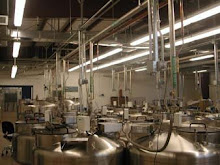
We've all heard the uses of liquid nitrogen and its unique properties that help scientists around the world discover new and amazing things. However, without the proper liquid nitrogen equipment and other precautions, the substance can quickly become very dangerous to those around the substance.
Recently, an astrophysicist in Egypt was cooling a charged coupled device camera for the observatory's telescope. He was carrying a cryogenic storage vacuum flask of liquid nitrogen which was to contain the heat coming off of the camera. The flask exploded, giving the astrophysicist severe chest and hand cold burns from the bursting liquid nitrogen.
Liquid nitrogen transfers to nitrogen gas of a rapid ration of 1:694, which is why the substance exploded. If you pour two gallons of liquid nitrogen into any warm vacuum it suddenly and immediately evaporates into a gas in front of your eyes. The properties of the substance are very dangerous for those who are unfamiliar with the safety precautions or liquid nitrogen equipment.
The gas is used for observatory and lab work but is more commonly used in refrigeration. Foods and goods can be transported around the world with the use of cryogenic storage. Liquid nitrogen is also vital in the cryopreservation of blood, reproductive cells and other biological samples.
It's also used in low temperature medical treatment in some dermatology cases. Also, construction companies may be able to use liquid nitrogen to freeze damaged water pipes and stopping water leaks during the fixing process. In the military, liquid nitrogen is used in heat-seeking missiles to prevent sensors from getting confused by their own heat signals or by the heat form the planes that are launching them.
There are so many applications of liquid nitrogen, but you need the proper liquid nitrogen equipment to ensure that the safety of everyone is preserved.
Showing posts with label Liquid Nitrogen Equipment. Show all posts
Showing posts with label Liquid Nitrogen Equipment. Show all posts
Tuesday, January 31, 2012

Tuesday, December 20, 2011
Handling Liquid Nitrogen and Liquid Nitrogen Equipment
Handling liquid nitrogen and liquid nitrogen equipment can be very dangerous, so there will be a need for extreme precaution for everyone who is involved. Liquid nitrogen is a dangerous material that can cause burns and loss of oxygen levels in the air. For example, if a 10 liter dewar is spilled in an unventilated 274 square foot room with an 8 foot ceiling, the oxygen levels would reduce to 19.5 percent. There would be a need for air respirators. Of course, this is a small room and most labs and classrooms are much larger and the oxygen levels should remain relatively high during a spill. However, when transporting the liquid nitrogen and liquid nitrogen equipment in a truck or van is a different story.
But suffocation isn't the main problem with liquid nitrogen and liquid nitrogen equipment. Freeze burns are a much more serious danger. This will cause the greatest concern when building an LN2 freezer.
These are the things that you should be worried when dealing with liquid nitrogen:
- Splatters, especially in eyes, while pouring
- Flying pieces of frozen objects
- Touching the nitrogen or other cold objects
So it's important to stress several precautions which include no touching and the use of goggles. Whenever pouring liquid nitrogen, it can splatter or spew out frozen pieces. It's also important to wear gloves and use tongs to handle any object that is being placed in or out of liquid nitrogen.
When handling liquid nitrogen and liquid nitrogen equipment, it's important to ensure safety to avoid any possible injuries.
But suffocation isn't the main problem with liquid nitrogen and liquid nitrogen equipment. Freeze burns are a much more serious danger. This will cause the greatest concern when building an LN2 freezer.
These are the things that you should be worried when dealing with liquid nitrogen:
- Splatters, especially in eyes, while pouring
- Flying pieces of frozen objects
- Touching the nitrogen or other cold objects
So it's important to stress several precautions which include no touching and the use of goggles. Whenever pouring liquid nitrogen, it can splatter or spew out frozen pieces. It's also important to wear gloves and use tongs to handle any object that is being placed in or out of liquid nitrogen.
When handling liquid nitrogen and liquid nitrogen equipment, it's important to ensure safety to avoid any possible injuries.
Wednesday, November 2, 2011
Safely Handle a Liquid Nitrogen Dewar
Safety experts say that nitrogen, despite its inert quality, causes more fatalities than any other chemical found in laboratories. That's why it's important that your cryogenic freezer system has a high-quality, reliable liquid nitrogen dewar. Our staff at Princeton Cryo Tech will always make sure that every one of our products, including dewars, are the highest quality. It's the best way we can help avoid catastrophic events occurring in a laboratory.
When a person is surrounded in a purely nitrogen atmosphere, oxygen flow is reversed from the arterial blood and tissues back into the lungs, causing unconsciousness. This is a very dangerous situation and similar effects can occur when working with liquid nitrogen in a laboratory setting. Liquid nitrogen chilled vapor collects near the floor, but can still cause unconsciousness after inhaling the vapor. Interestingly, though, over half of workers who die in confined spaces are attempting to rescue unconscious workers. So not only are the unconscious in danger, so are the people who try to help them.
If you work with nitrogen in your lab, it's important to have up-to-date safety meetings. In addition to meetings, training should take place, along with maintaining the best quality liquid nitrogen containers and equipment. Princeton Cryo makes sure that all of our products, like a liquid nitrogen dewar, will prevent laboratory accidents.
Dewars are designed for storing and dispensing liquid nitrogen. They are easy to operate and are constructed of high-quality materials. For more safety insurance, laboratories should be equipped with high-quality cryo gloves while keeping employees informed of all the proper safety techniques when handling these dangerous chemicals. Most of all make sure you have a reliable liquid nitrogen dewar from Princeton Cryo.
When a person is surrounded in a purely nitrogen atmosphere, oxygen flow is reversed from the arterial blood and tissues back into the lungs, causing unconsciousness. This is a very dangerous situation and similar effects can occur when working with liquid nitrogen in a laboratory setting. Liquid nitrogen chilled vapor collects near the floor, but can still cause unconsciousness after inhaling the vapor. Interestingly, though, over half of workers who die in confined spaces are attempting to rescue unconscious workers. So not only are the unconscious in danger, so are the people who try to help them.
If you work with nitrogen in your lab, it's important to have up-to-date safety meetings. In addition to meetings, training should take place, along with maintaining the best quality liquid nitrogen containers and equipment. Princeton Cryo makes sure that all of our products, like a liquid nitrogen dewar, will prevent laboratory accidents.
Dewars are designed for storing and dispensing liquid nitrogen. They are easy to operate and are constructed of high-quality materials. For more safety insurance, laboratories should be equipped with high-quality cryo gloves while keeping employees informed of all the proper safety techniques when handling these dangerous chemicals. Most of all make sure you have a reliable liquid nitrogen dewar from Princeton Cryo.
Thursday, September 8, 2011
Cryogenic Storage: MoreThan Just Science Fiction
In popular culture, cryogenic freezing is known as a scientific device by which people who are eager to witness to the future – or who are simply rich enough to – freeze their own bodies after death, in hopes that future medical science will have advanced enough to revive them.
Historical figures like Walt Disney have been suspected of cryogenically freezing themselves, and fictional ones like Austin Powers have parodied the process. Real-life scientists have actually done it, like Robert Ettinger, founder of the Cryonics Institute in Michigan, who froze family members after they died and has been frozen himself after passing only a few weeks ago; and Robert Nelson, a television repairman who joined the movement in the 1960s and will be depicted in a movie based on his life directed by Errol Morris with his character played by Paul Rudd.
Outside the science fiction and real-life hype, however, cryogenics is actually a significant part of the average person's life. Workers in hospitals and labs are more aware of this. Entire rooms are used to keep cryogenic storage safe, whether it is a liquid nitrogen dewar or a cryogenic freezer.
Cryogenic equipment is relied on to keep important body tissues preserved, like blood and stem cells. Some people choose to cryogenically freeze umbilical cord blood, for scientific research or potential use in the future. Cryogenic storage is commonly used in fertility clinics, where liquid nitrogen equipment is used to preserve human semen and eggs, embryos, and ovarian tissue. Many people who have experienced fertility problems have thus benefited from this practical use of cryogenic equipment. Cryogenics is more than simply scientific entertainment; it's an important tool in hospitals and medicine.
Historical figures like Walt Disney have been suspected of cryogenically freezing themselves, and fictional ones like Austin Powers have parodied the process. Real-life scientists have actually done it, like Robert Ettinger, founder of the Cryonics Institute in Michigan, who froze family members after they died and has been frozen himself after passing only a few weeks ago; and Robert Nelson, a television repairman who joined the movement in the 1960s and will be depicted in a movie based on his life directed by Errol Morris with his character played by Paul Rudd.
Outside the science fiction and real-life hype, however, cryogenics is actually a significant part of the average person's life. Workers in hospitals and labs are more aware of this. Entire rooms are used to keep cryogenic storage safe, whether it is a liquid nitrogen dewar or a cryogenic freezer.
Cryogenic equipment is relied on to keep important body tissues preserved, like blood and stem cells. Some people choose to cryogenically freeze umbilical cord blood, for scientific research or potential use in the future. Cryogenic storage is commonly used in fertility clinics, where liquid nitrogen equipment is used to preserve human semen and eggs, embryos, and ovarian tissue. Many people who have experienced fertility problems have thus benefited from this practical use of cryogenic equipment. Cryogenics is more than simply scientific entertainment; it's an important tool in hospitals and medicine.
Subscribe to:
Posts (Atom)