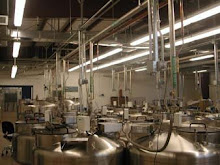
Cryogenic freezing can certainly be dangerous. That's why we provide the best-quality cryogenic equipment possible to ensure the safety and effectiveness of all cryogenic freezing systems.
With our products you can avoid problems and fines like one large frozen pizza company who was cited for nine alleged safety and health violations. Of course, most of the fines were of a result of neglect of the company, but you can make the cryogenic freezing process easier with our products.
One of the citations was a violation of exposing workers to an oxygen deficient atmosphere.
"Employers are responsible for knowing the hazards that exist in their workplace and training workers in proper safety precautions such as air monitoring and respirator use," said Kim Stille, director of OSHA's Madison Area Office. "OSHA is committed to protecting workers, especially when employers fail to do so."
The fines totaled $76,300 after OSHA initiated an inspection of the pizza company's plant in June. The violations were issued when workers were exposed to an oxygen deficient environment during the freezing process of the pizzas in a liquid nitrogen cryogenic freezer. The cryogenic freezer created a hazardous environment due to the buildup of nitrogen gas; however, no injuries or illnesses were reported as a result of the conditions.
Other fines focused on the lack of training and implementation of safety equipment. These fines can greatly hurt any company that uses cryogenic equipment. That's why we, at Princeton Cryo, think it's important to use the best equipment in the market. We strive to create a safe environment no matter what the use of the cryogenic freezer.
Showing posts with label Cryogenic Equipment. Show all posts
Showing posts with label Cryogenic Equipment. Show all posts
Thursday, February 2, 2012

Tuesday, January 31, 2012
The Useful But Dangerous Liquid Nitrogen
We've all heard the uses of liquid nitrogen and its unique properties that help scientists around the world discover new and amazing things. However, without the proper liquid nitrogen equipment and other precautions, the substance can quickly become very dangerous to those around the substance.
Recently, an astrophysicist in Egypt was cooling a charged coupled device camera for the observatory's telescope. He was carrying a cryogenic storage vacuum flask of liquid nitrogen which was to contain the heat coming off of the camera. The flask exploded, giving the astrophysicist severe chest and hand cold burns from the bursting liquid nitrogen.
Liquid nitrogen transfers to nitrogen gas of a rapid ration of 1:694, which is why the substance exploded. If you pour two gallons of liquid nitrogen into any warm vacuum it suddenly and immediately evaporates into a gas in front of your eyes. The properties of the substance are very dangerous for those who are unfamiliar with the safety precautions or liquid nitrogen equipment.
The gas is used for observatory and lab work but is more commonly used in refrigeration. Foods and goods can be transported around the world with the use of cryogenic storage. Liquid nitrogen is also vital in the cryopreservation of blood, reproductive cells and other biological samples.
It's also used in low temperature medical treatment in some dermatology cases. Also, construction companies may be able to use liquid nitrogen to freeze damaged water pipes and stopping water leaks during the fixing process. In the military, liquid nitrogen is used in heat-seeking missiles to prevent sensors from getting confused by their own heat signals or by the heat form the planes that are launching them.
There are so many applications of liquid nitrogen, but you need the proper liquid nitrogen equipment to ensure that the safety of everyone is preserved.
Recently, an astrophysicist in Egypt was cooling a charged coupled device camera for the observatory's telescope. He was carrying a cryogenic storage vacuum flask of liquid nitrogen which was to contain the heat coming off of the camera. The flask exploded, giving the astrophysicist severe chest and hand cold burns from the bursting liquid nitrogen.
Liquid nitrogen transfers to nitrogen gas of a rapid ration of 1:694, which is why the substance exploded. If you pour two gallons of liquid nitrogen into any warm vacuum it suddenly and immediately evaporates into a gas in front of your eyes. The properties of the substance are very dangerous for those who are unfamiliar with the safety precautions or liquid nitrogen equipment.
The gas is used for observatory and lab work but is more commonly used in refrigeration. Foods and goods can be transported around the world with the use of cryogenic storage. Liquid nitrogen is also vital in the cryopreservation of blood, reproductive cells and other biological samples.
It's also used in low temperature medical treatment in some dermatology cases. Also, construction companies may be able to use liquid nitrogen to freeze damaged water pipes and stopping water leaks during the fixing process. In the military, liquid nitrogen is used in heat-seeking missiles to prevent sensors from getting confused by their own heat signals or by the heat form the planes that are launching them.
There are so many applications of liquid nitrogen, but you need the proper liquid nitrogen equipment to ensure that the safety of everyone is preserved.
Wednesday, December 21, 2011
Types of biological materials that can be held in Cryogenic Storage
Cryogenic storage is very helpful when storing biological materials. Because a cryogenic freezer can freeze things at -150 degrees Celsius (refrigerated storage is about 5 degrees Celsius and typical freezer storage is about -20 degrees Celsius), it can store many biological materials without letting them go bad.
Some of the biological materials that can be stored are:
- Blood
- Plasma
- Bone
- DNA
- RNA
- Explant device storage (hips, mesh, etc.)
- Tissues and cell lines
- Agro and plant samples
- Pathology and legal specimens
- Stem cells and cord blood
- Fluids and urine
- Clinical supplies
- Serum
- Slides
This is just some of the things that can be held in cryogenic storage. The control of the temperature of valuable biological materials is very important. From storing sperm samples, blood samples to even ways of storing food, cryogenic freezing is one of the best ways to ensure pristine preservation.
Labs that have cryogenic freezers are more likely to have more beneficial biological samples and have more accurate tests for blood, DNA or other animal tissues. Thanks to cryogenic storage, biological materials can be held for a long time and won't spoil or deteriorate. This is important in guaranteeing to those who need biological specimens preserved.
Some of the biological materials that can be stored are:
- Blood
- Plasma
- Bone
- DNA
- RNA
- Explant device storage (hips, mesh, etc.)
- Tissues and cell lines
- Agro and plant samples
- Pathology and legal specimens
- Stem cells and cord blood
- Fluids and urine
- Clinical supplies
- Serum
- Slides
This is just some of the things that can be held in cryogenic storage. The control of the temperature of valuable biological materials is very important. From storing sperm samples, blood samples to even ways of storing food, cryogenic freezing is one of the best ways to ensure pristine preservation.
Labs that have cryogenic freezers are more likely to have more beneficial biological samples and have more accurate tests for blood, DNA or other animal tissues. Thanks to cryogenic storage, biological materials can be held for a long time and won't spoil or deteriorate. This is important in guaranteeing to those who need biological specimens preserved.
Thursday, September 8, 2011
Cryogenic Storage: MoreThan Just Science Fiction
In popular culture, cryogenic freezing is known as a scientific device by which people who are eager to witness to the future – or who are simply rich enough to – freeze their own bodies after death, in hopes that future medical science will have advanced enough to revive them.
Historical figures like Walt Disney have been suspected of cryogenically freezing themselves, and fictional ones like Austin Powers have parodied the process. Real-life scientists have actually done it, like Robert Ettinger, founder of the Cryonics Institute in Michigan, who froze family members after they died and has been frozen himself after passing only a few weeks ago; and Robert Nelson, a television repairman who joined the movement in the 1960s and will be depicted in a movie based on his life directed by Errol Morris with his character played by Paul Rudd.
Outside the science fiction and real-life hype, however, cryogenics is actually a significant part of the average person's life. Workers in hospitals and labs are more aware of this. Entire rooms are used to keep cryogenic storage safe, whether it is a liquid nitrogen dewar or a cryogenic freezer.
Cryogenic equipment is relied on to keep important body tissues preserved, like blood and stem cells. Some people choose to cryogenically freeze umbilical cord blood, for scientific research or potential use in the future. Cryogenic storage is commonly used in fertility clinics, where liquid nitrogen equipment is used to preserve human semen and eggs, embryos, and ovarian tissue. Many people who have experienced fertility problems have thus benefited from this practical use of cryogenic equipment. Cryogenics is more than simply scientific entertainment; it's an important tool in hospitals and medicine.
Historical figures like Walt Disney have been suspected of cryogenically freezing themselves, and fictional ones like Austin Powers have parodied the process. Real-life scientists have actually done it, like Robert Ettinger, founder of the Cryonics Institute in Michigan, who froze family members after they died and has been frozen himself after passing only a few weeks ago; and Robert Nelson, a television repairman who joined the movement in the 1960s and will be depicted in a movie based on his life directed by Errol Morris with his character played by Paul Rudd.
Outside the science fiction and real-life hype, however, cryogenics is actually a significant part of the average person's life. Workers in hospitals and labs are more aware of this. Entire rooms are used to keep cryogenic storage safe, whether it is a liquid nitrogen dewar or a cryogenic freezer.
Cryogenic equipment is relied on to keep important body tissues preserved, like blood and stem cells. Some people choose to cryogenically freeze umbilical cord blood, for scientific research or potential use in the future. Cryogenic storage is commonly used in fertility clinics, where liquid nitrogen equipment is used to preserve human semen and eggs, embryos, and ovarian tissue. Many people who have experienced fertility problems have thus benefited from this practical use of cryogenic equipment. Cryogenics is more than simply scientific entertainment; it's an important tool in hospitals and medicine.
Subscribe to:
Posts (Atom)