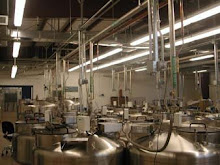
Slipping your children's teeth under the pillow for the tooth fairy may be a thing of the past. Now, thanks to LN2 freezer (liquid nitrogen) technology, companies are offering services to store baby teeth in case they are needed in the future to help treat or cure serious family medical issues.
The new technology allows companies to bank adult stem cells found in baby teeth and even in wisdom teeth. So instead of throwing those teeth away or having a dentist discard extracted wisdom teeth people can now store these precious dental stem cells that can be used for various dental and medical applications.
The lab harvests pulp and tissue that contains stem cells and then processes the cells for freezing. The cells are equilibrated with cyroprotectant and then placed in LN2 freezer storage units at the company. This will ensure long-term storage until the possible need by a healthcare provider.
The cost to store a tooth is just under $800 which includes the first year of storage after that fees fall about $10 a month to keep the tooth frozen.
As of right now there are no medical applications using dental stem cells but they are being used in studies. There is hope that one day – thanks to the help of LN2 freezer technology – doctors will be able to treat spinal cord injuries, MS (multiple sclerosis) and a variety of other issues.
So the next time the tooth fairy is in town, think about keeping that tooth instead of trading it in for a shiny coin. Who knows, that tooth may be worth someone's life down the road!
Showing posts with label LN2 Freezer. Show all posts
Showing posts with label LN2 Freezer. Show all posts
Friday, February 3, 2012

Tuesday, January 31, 2012
The Useful But Dangerous Liquid Nitrogen
We've all heard the uses of liquid nitrogen and its unique properties that help scientists around the world discover new and amazing things. However, without the proper liquid nitrogen equipment and other precautions, the substance can quickly become very dangerous to those around the substance.
Recently, an astrophysicist in Egypt was cooling a charged coupled device camera for the observatory's telescope. He was carrying a cryogenic storage vacuum flask of liquid nitrogen which was to contain the heat coming off of the camera. The flask exploded, giving the astrophysicist severe chest and hand cold burns from the bursting liquid nitrogen.
Liquid nitrogen transfers to nitrogen gas of a rapid ration of 1:694, which is why the substance exploded. If you pour two gallons of liquid nitrogen into any warm vacuum it suddenly and immediately evaporates into a gas in front of your eyes. The properties of the substance are very dangerous for those who are unfamiliar with the safety precautions or liquid nitrogen equipment.
The gas is used for observatory and lab work but is more commonly used in refrigeration. Foods and goods can be transported around the world with the use of cryogenic storage. Liquid nitrogen is also vital in the cryopreservation of blood, reproductive cells and other biological samples.
It's also used in low temperature medical treatment in some dermatology cases. Also, construction companies may be able to use liquid nitrogen to freeze damaged water pipes and stopping water leaks during the fixing process. In the military, liquid nitrogen is used in heat-seeking missiles to prevent sensors from getting confused by their own heat signals or by the heat form the planes that are launching them.
There are so many applications of liquid nitrogen, but you need the proper liquid nitrogen equipment to ensure that the safety of everyone is preserved.
Recently, an astrophysicist in Egypt was cooling a charged coupled device camera for the observatory's telescope. He was carrying a cryogenic storage vacuum flask of liquid nitrogen which was to contain the heat coming off of the camera. The flask exploded, giving the astrophysicist severe chest and hand cold burns from the bursting liquid nitrogen.
Liquid nitrogen transfers to nitrogen gas of a rapid ration of 1:694, which is why the substance exploded. If you pour two gallons of liquid nitrogen into any warm vacuum it suddenly and immediately evaporates into a gas in front of your eyes. The properties of the substance are very dangerous for those who are unfamiliar with the safety precautions or liquid nitrogen equipment.
The gas is used for observatory and lab work but is more commonly used in refrigeration. Foods and goods can be transported around the world with the use of cryogenic storage. Liquid nitrogen is also vital in the cryopreservation of blood, reproductive cells and other biological samples.
It's also used in low temperature medical treatment in some dermatology cases. Also, construction companies may be able to use liquid nitrogen to freeze damaged water pipes and stopping water leaks during the fixing process. In the military, liquid nitrogen is used in heat-seeking missiles to prevent sensors from getting confused by their own heat signals or by the heat form the planes that are launching them.
There are so many applications of liquid nitrogen, but you need the proper liquid nitrogen equipment to ensure that the safety of everyone is preserved.
Tuesday, December 20, 2011
Handling Liquid Nitrogen and Liquid Nitrogen Equipment
Handling liquid nitrogen and liquid nitrogen equipment can be very dangerous, so there will be a need for extreme precaution for everyone who is involved. Liquid nitrogen is a dangerous material that can cause burns and loss of oxygen levels in the air. For example, if a 10 liter dewar is spilled in an unventilated 274 square foot room with an 8 foot ceiling, the oxygen levels would reduce to 19.5 percent. There would be a need for air respirators. Of course, this is a small room and most labs and classrooms are much larger and the oxygen levels should remain relatively high during a spill. However, when transporting the liquid nitrogen and liquid nitrogen equipment in a truck or van is a different story.
But suffocation isn't the main problem with liquid nitrogen and liquid nitrogen equipment. Freeze burns are a much more serious danger. This will cause the greatest concern when building an LN2 freezer.
These are the things that you should be worried when dealing with liquid nitrogen:
- Splatters, especially in eyes, while pouring
- Flying pieces of frozen objects
- Touching the nitrogen or other cold objects
So it's important to stress several precautions which include no touching and the use of goggles. Whenever pouring liquid nitrogen, it can splatter or spew out frozen pieces. It's also important to wear gloves and use tongs to handle any object that is being placed in or out of liquid nitrogen.
When handling liquid nitrogen and liquid nitrogen equipment, it's important to ensure safety to avoid any possible injuries.
But suffocation isn't the main problem with liquid nitrogen and liquid nitrogen equipment. Freeze burns are a much more serious danger. This will cause the greatest concern when building an LN2 freezer.
These are the things that you should be worried when dealing with liquid nitrogen:
- Splatters, especially in eyes, while pouring
- Flying pieces of frozen objects
- Touching the nitrogen or other cold objects
So it's important to stress several precautions which include no touching and the use of goggles. Whenever pouring liquid nitrogen, it can splatter or spew out frozen pieces. It's also important to wear gloves and use tongs to handle any object that is being placed in or out of liquid nitrogen.
When handling liquid nitrogen and liquid nitrogen equipment, it's important to ensure safety to avoid any possible injuries.
Subscribe to:
Posts (Atom)