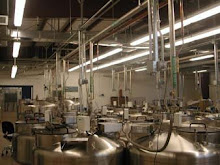
Odd reports have always swarmed around the Hall of Fame baseball slugger Ted Williams and the cryonic freezing of his head and body cryogenic storage containers.
Apparently Williams' head and body are still being stored in an Arizona cryonics lab. Williams' son, John Henry Williams, had is father placed in cryonic suspension, a process that freezes body parts in hopes that future scientific advancements will restore the dead to life or clone the person.
http://www.blogger.com/img/blank.gif
Oddly enough, reports have stated that Williams head has been separated from the body and put in different cryogenic storage containers. The two are in the same room, but Williams' head was placed in a liquid nitrogen-filled steel cryogenic storage can on a shelf, while his body is in the same room. The body is in a liquid-nitrogen-filled, nine-foot-tall cylindrical steel tank and is properly marked by his ID number, A-1949.
The bizarre part of the post-mortem drama is that this may have not been Williams' intentions. Instead, it appears his son wanted the process to be done. The only publically known documentation that suggested Williams wanted to be perceive was on a piece of scrap paper, which was stained with motor oil and was dated Nov. 2, 2000. The paper bares Williams, John Henry and his sister Claudia signatures stating to be put in "Bio-Stasis after we die."
Williams' body was flown to Arizona almost immediately after his death on July 5, 2002. Many people contend that John Henry wants to preserve his father's DNA or even sell it. The saga is certainly interesting considered the potential of cryonics thanks to cryogenic storage. Could you imagine seeing Ted Williams in his baseball gear again? Now that would be something!
Friday, April 13, 2012

Tuesday, April 10, 2012
Can Future Cryonic Technology Reanimate Life?
Is there a way for us humans to shed our mortality? Well, some have the idea of using cryogenic storage to preserve our bodies beyond death in the hope that science will find the secret to everlasting life.
While most Americans choose the traditional path of being buried or cremated following death, there is an alternative to this type of treatment. With cryonics, the storage system can preserve a recently deceased or a seriously diseased person in the hopes that one day scientists will figure out how to reanimate to cure afflictions such as a terminal illness. These cryonic patients, called cryonauts, place their trust in the scientific advancement of the future. That trust and risk may pay out at a chance of immortality. This may sound more like science fiction rather than founded science, but many foresee the possibility of reanimation in the future, either near or distant.
The scientific concern with cryogenic storage regards tends to deal with the formation of ice crystals in the patient's cells while the body is cooled to a chilly -200 degrees Celsius. Antifreeze solution is used to reduce the formation of these ice crystals, but they occur nonetheless and cause serious tissue damage – much like freezer burn. Although, scientists feel that there will eventually be a way to repair this damage or even prevent it for future cryonauts.
For proof of escalating technology, cryobiologists have found a new technology called vitrification, which allows preservation without damaging tissue. Cryogenic vitrification involves replacing the patient's blood with a unique antifreeze cocktail that prohibits ice formations and suspends cells in a glass-like state. However, vitrification has only been achieved with single human cells and not an entire body; but is this opening a path to future solutions.
At this point, cryogenic storage for bodies is putting a lot of stock in future science. While it seems very fictional and fanciful, just think of how many people 200 years ago would laugh at the idea of a flying Boeing 747?
While most Americans choose the traditional path of being buried or cremated following death, there is an alternative to this type of treatment. With cryonics, the storage system can preserve a recently deceased or a seriously diseased person in the hopes that one day scientists will figure out how to reanimate to cure afflictions such as a terminal illness. These cryonic patients, called cryonauts, place their trust in the scientific advancement of the future. That trust and risk may pay out at a chance of immortality. This may sound more like science fiction rather than founded science, but many foresee the possibility of reanimation in the future, either near or distant.
The scientific concern with cryogenic storage regards tends to deal with the formation of ice crystals in the patient's cells while the body is cooled to a chilly -200 degrees Celsius. Antifreeze solution is used to reduce the formation of these ice crystals, but they occur nonetheless and cause serious tissue damage – much like freezer burn. Although, scientists feel that there will eventually be a way to repair this damage or even prevent it for future cryonauts.
For proof of escalating technology, cryobiologists have found a new technology called vitrification, which allows preservation without damaging tissue. Cryogenic vitrification involves replacing the patient's blood with a unique antifreeze cocktail that prohibits ice formations and suspends cells in a glass-like state. However, vitrification has only been achieved with single human cells and not an entire body; but is this opening a path to future solutions.
At this point, cryogenic storage for bodies is putting a lot of stock in future science. While it seems very fictional and fanciful, just think of how many people 200 years ago would laugh at the idea of a flying Boeing 747?
Thursday, March 29, 2012
How to Choose a Cryogenic Storage Provider
It is best to seek out experts who know how to use cryogenic storage properly. Cryogenic storage is an expanding field in modern science and there are many new trends being utilized. If you are an individual or company that is seeking to use modern cryogenics, then it is important to find a company that has real world experience in the field.
Cryogenic storage companies should have familiarity with installation and design in various formats of cryogenic systems. You should also look for companies that have expertise in cell culture storage, cryobiological preservation techniques, alarm system troubleshooting, in-house freezer control devices, and general knowledge regarding cryogenic storage. These are some of the standard criteria that university labs, medical research groups, and pharmaceutical industries look for when they choose a cryogenic storage facility to work with.
With the sensitive nature of cryogenic storage, it is important that you only trust the best providers. With the important job of preserving such sensitive materials as human blood, eggs, semen and donor organs, it is imperative that the equipment that is used in cryogenics be top quality, and the company that you purchase the equipment from are knowledgeable in its use. More than just scientific progress hangs in the balance: with ruined eggs, a woman might not be able to conceive a child; with spoiled donor organs, a man might not be able to have the vital transplant he needs, and not have much more time left to wait for another one to be available.
With the right choice of cryogenic storage provider, you or your company will never have to worry about lost biological materials or organs, and you will be advised of every in and out of the use of their product.
Cryogenic storage companies should have familiarity with installation and design in various formats of cryogenic systems. You should also look for companies that have expertise in cell culture storage, cryobiological preservation techniques, alarm system troubleshooting, in-house freezer control devices, and general knowledge regarding cryogenic storage. These are some of the standard criteria that university labs, medical research groups, and pharmaceutical industries look for when they choose a cryogenic storage facility to work with.
With the sensitive nature of cryogenic storage, it is important that you only trust the best providers. With the important job of preserving such sensitive materials as human blood, eggs, semen and donor organs, it is imperative that the equipment that is used in cryogenics be top quality, and the company that you purchase the equipment from are knowledgeable in its use. More than just scientific progress hangs in the balance: with ruined eggs, a woman might not be able to conceive a child; with spoiled donor organs, a man might not be able to have the vital transplant he needs, and not have much more time left to wait for another one to be available.
With the right choice of cryogenic storage provider, you or your company will never have to worry about lost biological materials or organs, and you will be advised of every in and out of the use of their product.
Friday, February 3, 2012
LN2 Freezers Help Companies Play New Age Tooth Fairy by Storing Dental Stem Cells
Slipping your children's teeth under the pillow for the tooth fairy may be a thing of the past. Now, thanks to LN2 freezer (liquid nitrogen) technology, companies are offering services to store baby teeth in case they are needed in the future to help treat or cure serious family medical issues.
The new technology allows companies to bank adult stem cells found in baby teeth and even in wisdom teeth. So instead of throwing those teeth away or having a dentist discard extracted wisdom teeth people can now store these precious dental stem cells that can be used for various dental and medical applications.
The lab harvests pulp and tissue that contains stem cells and then processes the cells for freezing. The cells are equilibrated with cyroprotectant and then placed in LN2 freezer storage units at the company. This will ensure long-term storage until the possible need by a healthcare provider.
The cost to store a tooth is just under $800 which includes the first year of storage after that fees fall about $10 a month to keep the tooth frozen.
As of right now there are no medical applications using dental stem cells but they are being used in studies. There is hope that one day – thanks to the help of LN2 freezer technology – doctors will be able to treat spinal cord injuries, MS (multiple sclerosis) and a variety of other issues.
So the next time the tooth fairy is in town, think about keeping that tooth instead of trading it in for a shiny coin. Who knows, that tooth may be worth someone's life down the road!
The new technology allows companies to bank adult stem cells found in baby teeth and even in wisdom teeth. So instead of throwing those teeth away or having a dentist discard extracted wisdom teeth people can now store these precious dental stem cells that can be used for various dental and medical applications.
The lab harvests pulp and tissue that contains stem cells and then processes the cells for freezing. The cells are equilibrated with cyroprotectant and then placed in LN2 freezer storage units at the company. This will ensure long-term storage until the possible need by a healthcare provider.
The cost to store a tooth is just under $800 which includes the first year of storage after that fees fall about $10 a month to keep the tooth frozen.
As of right now there are no medical applications using dental stem cells but they are being used in studies. There is hope that one day – thanks to the help of LN2 freezer technology – doctors will be able to treat spinal cord injuries, MS (multiple sclerosis) and a variety of other issues.
So the next time the tooth fairy is in town, think about keeping that tooth instead of trading it in for a shiny coin. Who knows, that tooth may be worth someone's life down the road!
Thursday, February 2, 2012
Use Princeton Cryo's High-Quality Cryogenic Equipment to Avoid Fines
Cryogenic freezing can certainly be dangerous. That's why we provide the best-quality cryogenic equipment possible to ensure the safety and effectiveness of all cryogenic freezing systems.
With our products you can avoid problems and fines like one large frozen pizza company who was cited for nine alleged safety and health violations. Of course, most of the fines were of a result of neglect of the company, but you can make the cryogenic freezing process easier with our products.
One of the citations was a violation of exposing workers to an oxygen deficient atmosphere.
"Employers are responsible for knowing the hazards that exist in their workplace and training workers in proper safety precautions such as air monitoring and respirator use," said Kim Stille, director of OSHA's Madison Area Office. "OSHA is committed to protecting workers, especially when employers fail to do so."
The fines totaled $76,300 after OSHA initiated an inspection of the pizza company's plant in June. The violations were issued when workers were exposed to an oxygen deficient environment during the freezing process of the pizzas in a liquid nitrogen cryogenic freezer. The cryogenic freezer created a hazardous environment due to the buildup of nitrogen gas; however, no injuries or illnesses were reported as a result of the conditions.
Other fines focused on the lack of training and implementation of safety equipment. These fines can greatly hurt any company that uses cryogenic equipment. That's why we, at Princeton Cryo, think it's important to use the best equipment in the market. We strive to create a safe environment no matter what the use of the cryogenic freezer.
With our products you can avoid problems and fines like one large frozen pizza company who was cited for nine alleged safety and health violations. Of course, most of the fines were of a result of neglect of the company, but you can make the cryogenic freezing process easier with our products.
One of the citations was a violation of exposing workers to an oxygen deficient atmosphere.
"Employers are responsible for knowing the hazards that exist in their workplace and training workers in proper safety precautions such as air monitoring and respirator use," said Kim Stille, director of OSHA's Madison Area Office. "OSHA is committed to protecting workers, especially when employers fail to do so."
The fines totaled $76,300 after OSHA initiated an inspection of the pizza company's plant in June. The violations were issued when workers were exposed to an oxygen deficient environment during the freezing process of the pizzas in a liquid nitrogen cryogenic freezer. The cryogenic freezer created a hazardous environment due to the buildup of nitrogen gas; however, no injuries or illnesses were reported as a result of the conditions.
Other fines focused on the lack of training and implementation of safety equipment. These fines can greatly hurt any company that uses cryogenic equipment. That's why we, at Princeton Cryo, think it's important to use the best equipment in the market. We strive to create a safe environment no matter what the use of the cryogenic freezer.
Tuesday, January 31, 2012
The Useful But Dangerous Liquid Nitrogen
We've all heard the uses of liquid nitrogen and its unique properties that help scientists around the world discover new and amazing things. However, without the proper liquid nitrogen equipment and other precautions, the substance can quickly become very dangerous to those around the substance.
Recently, an astrophysicist in Egypt was cooling a charged coupled device camera for the observatory's telescope. He was carrying a cryogenic storage vacuum flask of liquid nitrogen which was to contain the heat coming off of the camera. The flask exploded, giving the astrophysicist severe chest and hand cold burns from the bursting liquid nitrogen.
Liquid nitrogen transfers to nitrogen gas of a rapid ration of 1:694, which is why the substance exploded. If you pour two gallons of liquid nitrogen into any warm vacuum it suddenly and immediately evaporates into a gas in front of your eyes. The properties of the substance are very dangerous for those who are unfamiliar with the safety precautions or liquid nitrogen equipment.
The gas is used for observatory and lab work but is more commonly used in refrigeration. Foods and goods can be transported around the world with the use of cryogenic storage. Liquid nitrogen is also vital in the cryopreservation of blood, reproductive cells and other biological samples.
It's also used in low temperature medical treatment in some dermatology cases. Also, construction companies may be able to use liquid nitrogen to freeze damaged water pipes and stopping water leaks during the fixing process. In the military, liquid nitrogen is used in heat-seeking missiles to prevent sensors from getting confused by their own heat signals or by the heat form the planes that are launching them.
There are so many applications of liquid nitrogen, but you need the proper liquid nitrogen equipment to ensure that the safety of everyone is preserved.
Recently, an astrophysicist in Egypt was cooling a charged coupled device camera for the observatory's telescope. He was carrying a cryogenic storage vacuum flask of liquid nitrogen which was to contain the heat coming off of the camera. The flask exploded, giving the astrophysicist severe chest and hand cold burns from the bursting liquid nitrogen.
Liquid nitrogen transfers to nitrogen gas of a rapid ration of 1:694, which is why the substance exploded. If you pour two gallons of liquid nitrogen into any warm vacuum it suddenly and immediately evaporates into a gas in front of your eyes. The properties of the substance are very dangerous for those who are unfamiliar with the safety precautions or liquid nitrogen equipment.
The gas is used for observatory and lab work but is more commonly used in refrigeration. Foods and goods can be transported around the world with the use of cryogenic storage. Liquid nitrogen is also vital in the cryopreservation of blood, reproductive cells and other biological samples.
It's also used in low temperature medical treatment in some dermatology cases. Also, construction companies may be able to use liquid nitrogen to freeze damaged water pipes and stopping water leaks during the fixing process. In the military, liquid nitrogen is used in heat-seeking missiles to prevent sensors from getting confused by their own heat signals or by the heat form the planes that are launching them.
There are so many applications of liquid nitrogen, but you need the proper liquid nitrogen equipment to ensure that the safety of everyone is preserved.
Tuesday, January 3, 2012
We Stand By Our Products With a 100 Percent Guarantee
We at PrincetonCryo.com believe in valuing our customer's satisfaction with all of our products. We offer a first-rate customer service that can help your needs, which can prove invaluable in the world of cryogenics.
We offer top of the line cryogenic equipment to help you build the best cryogenic storage system on the market. PrincetonCryo.com provides industry-leading cryogenic design and engineers that are instrumental in creating the most well-renowned equipment in the world. Our engineers are experience and well trained to design and install all of our cryogenic equipment.
Because we have set a high bar for ourselves and have earned the reputation as a reliable, high-quality leader in the cryogenic industry, we know that all of our customers will have 100 percent satisfaction.
If you do not have 100 percent satisfaction, we adhere to a "No Hassle" return policy where we'll make sure your cryogenic equipment is working correctly or you'll get your money back. So if you're in the field that needs cryogenic storage equipment then look no further than PrincetonCryo.com, we guarantee you'll be satisfied.
We offer top of the line cryogenic equipment to help you build the best cryogenic storage system on the market. PrincetonCryo.com provides industry-leading cryogenic design and engineers that are instrumental in creating the most well-renowned equipment in the world. Our engineers are experience and well trained to design and install all of our cryogenic equipment.
Because we have set a high bar for ourselves and have earned the reputation as a reliable, high-quality leader in the cryogenic industry, we know that all of our customers will have 100 percent satisfaction.
If you do not have 100 percent satisfaction, we adhere to a "No Hassle" return policy where we'll make sure your cryogenic equipment is working correctly or you'll get your money back. So if you're in the field that needs cryogenic storage equipment then look no further than PrincetonCryo.com, we guarantee you'll be satisfied.
Wednesday, December 21, 2011
Types of biological materials that can be held in Cryogenic Storage
Cryogenic storage is very helpful when storing biological materials. Because a cryogenic freezer can freeze things at -150 degrees Celsius (refrigerated storage is about 5 degrees Celsius and typical freezer storage is about -20 degrees Celsius), it can store many biological materials without letting them go bad.
Some of the biological materials that can be stored are:
- Blood
- Plasma
- Bone
- DNA
- RNA
- Explant device storage (hips, mesh, etc.)
- Tissues and cell lines
- Agro and plant samples
- Pathology and legal specimens
- Stem cells and cord blood
- Fluids and urine
- Clinical supplies
- Serum
- Slides
This is just some of the things that can be held in cryogenic storage. The control of the temperature of valuable biological materials is very important. From storing sperm samples, blood samples to even ways of storing food, cryogenic freezing is one of the best ways to ensure pristine preservation.
Labs that have cryogenic freezers are more likely to have more beneficial biological samples and have more accurate tests for blood, DNA or other animal tissues. Thanks to cryogenic storage, biological materials can be held for a long time and won't spoil or deteriorate. This is important in guaranteeing to those who need biological specimens preserved.
Some of the biological materials that can be stored are:
- Blood
- Plasma
- Bone
- DNA
- RNA
- Explant device storage (hips, mesh, etc.)
- Tissues and cell lines
- Agro and plant samples
- Pathology and legal specimens
- Stem cells and cord blood
- Fluids and urine
- Clinical supplies
- Serum
- Slides
This is just some of the things that can be held in cryogenic storage. The control of the temperature of valuable biological materials is very important. From storing sperm samples, blood samples to even ways of storing food, cryogenic freezing is one of the best ways to ensure pristine preservation.
Labs that have cryogenic freezers are more likely to have more beneficial biological samples and have more accurate tests for blood, DNA or other animal tissues. Thanks to cryogenic storage, biological materials can be held for a long time and won't spoil or deteriorate. This is important in guaranteeing to those who need biological specimens preserved.
Tuesday, December 20, 2011
Handling Liquid Nitrogen and Liquid Nitrogen Equipment
Handling liquid nitrogen and liquid nitrogen equipment can be very dangerous, so there will be a need for extreme precaution for everyone who is involved. Liquid nitrogen is a dangerous material that can cause burns and loss of oxygen levels in the air. For example, if a 10 liter dewar is spilled in an unventilated 274 square foot room with an 8 foot ceiling, the oxygen levels would reduce to 19.5 percent. There would be a need for air respirators. Of course, this is a small room and most labs and classrooms are much larger and the oxygen levels should remain relatively high during a spill. However, when transporting the liquid nitrogen and liquid nitrogen equipment in a truck or van is a different story.
But suffocation isn't the main problem with liquid nitrogen and liquid nitrogen equipment. Freeze burns are a much more serious danger. This will cause the greatest concern when building an LN2 freezer.
These are the things that you should be worried when dealing with liquid nitrogen:
- Splatters, especially in eyes, while pouring
- Flying pieces of frozen objects
- Touching the nitrogen or other cold objects
So it's important to stress several precautions which include no touching and the use of goggles. Whenever pouring liquid nitrogen, it can splatter or spew out frozen pieces. It's also important to wear gloves and use tongs to handle any object that is being placed in or out of liquid nitrogen.
When handling liquid nitrogen and liquid nitrogen equipment, it's important to ensure safety to avoid any possible injuries.
But suffocation isn't the main problem with liquid nitrogen and liquid nitrogen equipment. Freeze burns are a much more serious danger. This will cause the greatest concern when building an LN2 freezer.
These are the things that you should be worried when dealing with liquid nitrogen:
- Splatters, especially in eyes, while pouring
- Flying pieces of frozen objects
- Touching the nitrogen or other cold objects
So it's important to stress several precautions which include no touching and the use of goggles. Whenever pouring liquid nitrogen, it can splatter or spew out frozen pieces. It's also important to wear gloves and use tongs to handle any object that is being placed in or out of liquid nitrogen.
When handling liquid nitrogen and liquid nitrogen equipment, it's important to ensure safety to avoid any possible injuries.
Monday, November 7, 2011
Using Cryogenic Freezer Systems to Preserve Fruits and Vegetables
When people think of cryogenic freezer systems or cryogenically freezing things, they immediately think of freezing dead bodies to preserve them for the future. However, cryogenics have advanced way past common science fiction plot lines. In actuality, cryogenics help us with every-day life.
Many food distributors use cryogenic freezing to preserve fruits and vegetables. Freezing preservation is important in retaining the quality of agriculture products over long storage and shipping periods. As methods of long-term preservation of agricultural products, freezing is far superior to canning and dehydration in regards to retaining taste and nutrient properties. Cryogenic freezing is cheaper than the dehydration or canning process, while using up less resources and time. When the overall cost is considered, freezing is the most cost-effective of any method of food preservation.
The frozen food market is one of the largest and most diverse sectors of the food industry. From TV dinners to frozen strawberries, the frozen food sector has a value of more than $27.3 billion in the United States alone. To keep this business alive, cryogenic freezer systems have played a large part in the refrigeration of food products. The success of cryogenic freezing comes from the elimination of heat from low temperature points towards points with higher temperatures. The cryogenic system achieves this through the use of liquid nitrogen and carbon dioxide to keep the products frozen and unable to spoil.
Remember the next time you go grocery shopping, there's a chance that some of the food in your grocery cart are made possible through the advancements of cryogenic freezer systems.
Many food distributors use cryogenic freezing to preserve fruits and vegetables. Freezing preservation is important in retaining the quality of agriculture products over long storage and shipping periods. As methods of long-term preservation of agricultural products, freezing is far superior to canning and dehydration in regards to retaining taste and nutrient properties. Cryogenic freezing is cheaper than the dehydration or canning process, while using up less resources and time. When the overall cost is considered, freezing is the most cost-effective of any method of food preservation.
The frozen food market is one of the largest and most diverse sectors of the food industry. From TV dinners to frozen strawberries, the frozen food sector has a value of more than $27.3 billion in the United States alone. To keep this business alive, cryogenic freezer systems have played a large part in the refrigeration of food products. The success of cryogenic freezing comes from the elimination of heat from low temperature points towards points with higher temperatures. The cryogenic system achieves this through the use of liquid nitrogen and carbon dioxide to keep the products frozen and unable to spoil.
Remember the next time you go grocery shopping, there's a chance that some of the food in your grocery cart are made possible through the advancements of cryogenic freezer systems.
Wednesday, November 2, 2011
Safely Handle a Liquid Nitrogen Dewar
Safety experts say that nitrogen, despite its inert quality, causes more fatalities than any other chemical found in laboratories. That's why it's important that your cryogenic freezer system has a high-quality, reliable liquid nitrogen dewar. Our staff at Princeton Cryo Tech will always make sure that every one of our products, including dewars, are the highest quality. It's the best way we can help avoid catastrophic events occurring in a laboratory.
When a person is surrounded in a purely nitrogen atmosphere, oxygen flow is reversed from the arterial blood and tissues back into the lungs, causing unconsciousness. This is a very dangerous situation and similar effects can occur when working with liquid nitrogen in a laboratory setting. Liquid nitrogen chilled vapor collects near the floor, but can still cause unconsciousness after inhaling the vapor. Interestingly, though, over half of workers who die in confined spaces are attempting to rescue unconscious workers. So not only are the unconscious in danger, so are the people who try to help them.
If you work with nitrogen in your lab, it's important to have up-to-date safety meetings. In addition to meetings, training should take place, along with maintaining the best quality liquid nitrogen containers and equipment. Princeton Cryo makes sure that all of our products, like a liquid nitrogen dewar, will prevent laboratory accidents.
Dewars are designed for storing and dispensing liquid nitrogen. They are easy to operate and are constructed of high-quality materials. For more safety insurance, laboratories should be equipped with high-quality cryo gloves while keeping employees informed of all the proper safety techniques when handling these dangerous chemicals. Most of all make sure you have a reliable liquid nitrogen dewar from Princeton Cryo.
When a person is surrounded in a purely nitrogen atmosphere, oxygen flow is reversed from the arterial blood and tissues back into the lungs, causing unconsciousness. This is a very dangerous situation and similar effects can occur when working with liquid nitrogen in a laboratory setting. Liquid nitrogen chilled vapor collects near the floor, but can still cause unconsciousness after inhaling the vapor. Interestingly, though, over half of workers who die in confined spaces are attempting to rescue unconscious workers. So not only are the unconscious in danger, so are the people who try to help them.
If you work with nitrogen in your lab, it's important to have up-to-date safety meetings. In addition to meetings, training should take place, along with maintaining the best quality liquid nitrogen containers and equipment. Princeton Cryo makes sure that all of our products, like a liquid nitrogen dewar, will prevent laboratory accidents.
Dewars are designed for storing and dispensing liquid nitrogen. They are easy to operate and are constructed of high-quality materials. For more safety insurance, laboratories should be equipped with high-quality cryo gloves while keeping employees informed of all the proper safety techniques when handling these dangerous chemicals. Most of all make sure you have a reliable liquid nitrogen dewar from Princeton Cryo.
Thursday, October 6, 2011
Cryogenic Freezing Helps the Food Production Business
Cryogenically freezing food has become a way to transport large masses of frozen food and promote a better overall product during production. This is helpful when transporting to hard-traversed areas such as battlegrounds or natural disaster struck areas. Or it's helpful to the mass dispersion of food through the country and world.
However, a cryogenic freezer can also be used in a food industry that is vast. Processing things from hamburger, strawberries and bread can be quite different. Special cryogenic gasses can promote seed germination in plans while stunning the meat of animals and fish during slaughter. Although this is not gentler on the animal, it produces a better quickly of product. The science of cryogenics has improved the mass production of food.
CO2 gases can help the ease of de-boning of meat, while delicate baking items, such as muffins cakes and scones, can be stored in a ln2 freezer and shortens production time. These are all results of the boom of cryogenics.
This method of freezing preservation drops the temperature at which organisms are unable to spoil. Basically it makes water unavailable for microorganisms and for chemical reactions, allowing a longer shelf life to food that would otherwise spoil quickly. So using a cryogenic freezer or LN2 freezer is one of the best ways to enhance the food industry.
However, a cryogenic freezer can also be used in a food industry that is vast. Processing things from hamburger, strawberries and bread can be quite different. Special cryogenic gasses can promote seed germination in plans while stunning the meat of animals and fish during slaughter. Although this is not gentler on the animal, it produces a better quickly of product. The science of cryogenics has improved the mass production of food.
CO2 gases can help the ease of de-boning of meat, while delicate baking items, such as muffins cakes and scones, can be stored in a ln2 freezer and shortens production time. These are all results of the boom of cryogenics.
This method of freezing preservation drops the temperature at which organisms are unable to spoil. Basically it makes water unavailable for microorganisms and for chemical reactions, allowing a longer shelf life to food that would otherwise spoil quickly. So using a cryogenic freezer or LN2 freezer is one of the best ways to enhance the food industry.
Monday, October 3, 2011
Cryogenic Freezer Sperm Bank Says 'No Thanks' to Redheads
One of the world's largest cryogenic freezer sperm banks in the world is now rejecting red-haired donors. It's simply for the fact that Cyros International's the stock of red head sperm specimens have filled to capacity.
The clinic says that redheads are still is high demand in Ireland, but it's not enough to for the bank to accept donations. They have 140,000 doses of sperm from redheads, which is more than enough right now. Cryos International also said they won't take any Scandinavian donors for the time being, unless they have brown eyes.
Although, the cryogenic freezer clinic is not closing its doors to all redhead sperm donors altogether, cups are still accessible to those who have brown eyes. The main issue is that many Scandinavian donors have blonde and red hair, which stems back to their Viking ancestors that populated Scotland and Ireland.
The sperm bank is also looking for more Black, Asian, Hispanic, Mediterranean and mixed-race donors so they can offer potential parent with options of all races and ethnicities.
For a blue-eyed redhead, sperm may be in higher demand if he is smart, tall, athletic or musical. The U.S. first sperm bank located in Birmingham, Mich., says they are still looking for redheads, though, and has no problems with overcapacity. Of course, potential parents overall prefer donors who are athletically or musically inclined along with high education. Sometimes parents even want a specific blood type.
For a blue-eyed redhead, sperm may be in higher demand if he is smart, tall, athletic or musical. The U.S. first sperm bank located in Birmingham, Mich., says they are still looking for redheads, though, and has no problems with overcapacity. Of course, potential parents overall prefer donors who are athletically or musically inclined along with high education. Sometimes parents even want a specific blood type.
Thursday, September 8, 2011
Cryogenic Storage: MoreThan Just Science Fiction
In popular culture, cryogenic freezing is known as a scientific device by which people who are eager to witness to the future – or who are simply rich enough to – freeze their own bodies after death, in hopes that future medical science will have advanced enough to revive them.
Historical figures like Walt Disney have been suspected of cryogenically freezing themselves, and fictional ones like Austin Powers have parodied the process. Real-life scientists have actually done it, like Robert Ettinger, founder of the Cryonics Institute in Michigan, who froze family members after they died and has been frozen himself after passing only a few weeks ago; and Robert Nelson, a television repairman who joined the movement in the 1960s and will be depicted in a movie based on his life directed by Errol Morris with his character played by Paul Rudd.
Outside the science fiction and real-life hype, however, cryogenics is actually a significant part of the average person's life. Workers in hospitals and labs are more aware of this. Entire rooms are used to keep cryogenic storage safe, whether it is a liquid nitrogen dewar or a cryogenic freezer.
Cryogenic equipment is relied on to keep important body tissues preserved, like blood and stem cells. Some people choose to cryogenically freeze umbilical cord blood, for scientific research or potential use in the future. Cryogenic storage is commonly used in fertility clinics, where liquid nitrogen equipment is used to preserve human semen and eggs, embryos, and ovarian tissue. Many people who have experienced fertility problems have thus benefited from this practical use of cryogenic equipment. Cryogenics is more than simply scientific entertainment; it's an important tool in hospitals and medicine.
Historical figures like Walt Disney have been suspected of cryogenically freezing themselves, and fictional ones like Austin Powers have parodied the process. Real-life scientists have actually done it, like Robert Ettinger, founder of the Cryonics Institute in Michigan, who froze family members after they died and has been frozen himself after passing only a few weeks ago; and Robert Nelson, a television repairman who joined the movement in the 1960s and will be depicted in a movie based on his life directed by Errol Morris with his character played by Paul Rudd.
Outside the science fiction and real-life hype, however, cryogenics is actually a significant part of the average person's life. Workers in hospitals and labs are more aware of this. Entire rooms are used to keep cryogenic storage safe, whether it is a liquid nitrogen dewar or a cryogenic freezer.
Cryogenic equipment is relied on to keep important body tissues preserved, like blood and stem cells. Some people choose to cryogenically freeze umbilical cord blood, for scientific research or potential use in the future. Cryogenic storage is commonly used in fertility clinics, where liquid nitrogen equipment is used to preserve human semen and eggs, embryos, and ovarian tissue. Many people who have experienced fertility problems have thus benefited from this practical use of cryogenic equipment. Cryogenics is more than simply scientific entertainment; it's an important tool in hospitals and medicine.
Monday, November 16, 2009
Stem Cell Research
The first human embryonic stem cell treatment approved by the FDA for human testing has been shown to restore limb function in rats with neck spinal cord injuries - a finding that could expand the clinical trial to include people with cervical damage.
Full Story:
http://www.uci.edu/features/feature_cervicalstemcells_091109.php
Full Story:
http://www.uci.edu/features/feature_cervicalstemcells_091109.php
Tuesday, October 27, 2009
New Developments
Growing Cartilage from Stem Cells
Using adult stem cells from bone marrow and skin as well as human embryonic stem cells, researchers have grown cartilage tissue in the lab (UC Davis)
Neural Stem Cells Show Promise for Treating Age-Related Macular Degeneration
StemCells, Inc. announced recently new preclinical data showing that its human neural stem cells protect cone photoreceptors in the eye from progressive degeneration and preserve visual function long term. (StemCells, Inc., Palo Alto)
Using adult stem cells from bone marrow and skin as well as human embryonic stem cells, researchers have grown cartilage tissue in the lab (UC Davis)
Neural Stem Cells Show Promise for Treating Age-Related Macular Degeneration
StemCells, Inc. announced recently new preclinical data showing that its human neural stem cells protect cone photoreceptors in the eye from progressive degeneration and preserve visual function long term. (StemCells, Inc., Palo Alto)
Tuesday, September 29, 2009
Events
World Stem Cells & Regenerative Medicine Congress Asia
October 5-7, 2009
Singapore
2009 World Conference On Regenerative Medicine
October 29-31, 2009
Leipzig, Germany
WiCell Human Embryonic Stem Cell Course
December 7-9, 2009
Madison, United States
Phacilitate Cell and Gene Therapy
January 25-27, 2010
Washington, DC, United States
Molecular Medicine Tri-Conference 2010
February 3-5, 2010
San Francisco, United States
SMi's 2nd Annual Stem Cells
February 15-16, 2010
London, United Kingdom
Keyston Symposium B4Stem Cell Differentiation and Dedifferentation
February 15-20, 2010
Keyston, United States
Stem Cell Summit
February 16, 2010
New York, United States
ISSCR 8th Annual Meeting
June 16-19, 2010
San Francisco, Untied States
October 5-7, 2009
Singapore
2009 World Conference On Regenerative Medicine
October 29-31, 2009
Leipzig, Germany
WiCell Human Embryonic Stem Cell Course
December 7-9, 2009
Madison, United States
Phacilitate Cell and Gene Therapy
January 25-27, 2010
Washington, DC, United States
Molecular Medicine Tri-Conference 2010
February 3-5, 2010
San Francisco, United States
SMi's 2nd Annual Stem Cells
February 15-16, 2010
London, United Kingdom
Keyston Symposium B4Stem Cell Differentiation and Dedifferentation
February 15-20, 2010
Keyston, United States
Stem Cell Summit
February 16, 2010
New York, United States
ISSCR 8th Annual Meeting
June 16-19, 2010
San Francisco, Untied States
Tuesday, September 22, 2009
Liquid Nitrogen Sprayer
Cry AC is a device that will spray liquid nitrogen to freeze various materials. For more information, go to princetoncryo.com and search Cry-AC.
Thursday, May 7, 2009
Skid Crate Improvements
All MVE cryogenic freezers will be shipped in wooden crates fastened with screws on the front and top panels effective immediately. Without excess damage to wooden panels the use of screws instead of staples will allow service technicians to remove the cryogenic freezer, enabling greater opportunity if necessary for the end-user to reuse the skid/crate.
Monday, May 4, 2009
Differences in HE Versions
About the different HE versions, there has been some confusion and these differences are chart out below.
HE – Stainless steel turntable with pie shaped divisions, operates at -150°C,
HE+ –Similar as HE except has more usable height and aluminum turntable
HE Gen 2 – Similar to HE except the turntable has rectangular divisions
HE+ Gen 2– Similar to HE Gen2 except has more usable height
ETERNE – Aluminum turntable with pie shaped divisions, operates at -190°C
For more detailed information see the table on next page.
Subscribe to:
Posts (Atom)