In popular culture, cryogenic freezing is known as a scientific device by which people who are eager to witness to the future – or who are simply rich enough to – freeze their own bodies after death, in hopes that future medical science will have advanced enough to revive them.
Historical figures like Walt Disney have been suspected of cryogenically freezing themselves, and fictional ones like Austin Powers have parodied the process. Real-life scientists have actually done it, like Robert Ettinger, founder of the Cryonics Institute in Michigan, who froze family members after they died and has been frozen himself after passing only a few weeks ago; and Robert Nelson, a television repairman who joined the movement in the 1960s and will be depicted in a movie based on his life directed by Errol Morris with his character played by Paul Rudd.
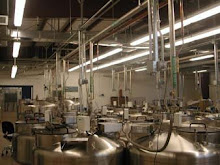
Outside the science fiction and real-life hype, however, cryogenics is actually a significant part of the average person's life. Workers in hospitals and labs are more aware of this. Entire rooms are used to keep cryogenic storage safe, whether it is a liquid nitrogen dewar or a cryogenic freezer.
Cryogenic equipment is relied on to keep important body tissues preserved, like blood and stem cells. Some people choose to cryogenically freeze umbilical cord blood, for scientific research or potential use in the future. Cryogenic storage is commonly used in fertility clinics, where liquid nitrogen equipment is used to preserve human semen and eggs, embryos, and ovarian tissue. Many people who have experienced fertility problems have thus benefited from this practical use of cryogenic equipment. Cryogenics is more than simply scientific entertainment; it's an important tool in hospitals and medicine.
Thursday, September 8, 2011

Monday, November 16, 2009
Stem Cell Research
The first human embryonic stem cell treatment approved by the FDA for human testing has been shown to restore limb function in rats with neck spinal cord injuries - a finding that could expand the clinical trial to include people with cervical damage.
Full Story:
http://www.uci.edu/features/feature_cervicalstemcells_091109.php
Full Story:
http://www.uci.edu/features/feature_cervicalstemcells_091109.php
Tuesday, October 27, 2009
New Developments
Growing Cartilage from Stem Cells
Using adult stem cells from bone marrow and skin as well as human embryonic stem cells, researchers have grown cartilage tissue in the lab (UC Davis)
Neural Stem Cells Show Promise for Treating Age-Related Macular Degeneration
StemCells, Inc. announced recently new preclinical data showing that its human neural stem cells protect cone photoreceptors in the eye from progressive degeneration and preserve visual function long term. (StemCells, Inc., Palo Alto)
Using adult stem cells from bone marrow and skin as well as human embryonic stem cells, researchers have grown cartilage tissue in the lab (UC Davis)
Neural Stem Cells Show Promise for Treating Age-Related Macular Degeneration
StemCells, Inc. announced recently new preclinical data showing that its human neural stem cells protect cone photoreceptors in the eye from progressive degeneration and preserve visual function long term. (StemCells, Inc., Palo Alto)
Tuesday, September 29, 2009
Events
World Stem Cells & Regenerative Medicine Congress Asia
October 5-7, 2009
Singapore
2009 World Conference On Regenerative Medicine
October 29-31, 2009
Leipzig, Germany
WiCell Human Embryonic Stem Cell Course
December 7-9, 2009
Madison, United States
Phacilitate Cell and Gene Therapy
January 25-27, 2010
Washington, DC, United States
Molecular Medicine Tri-Conference 2010
February 3-5, 2010
San Francisco, United States
SMi's 2nd Annual Stem Cells
February 15-16, 2010
London, United Kingdom
Keyston Symposium B4Stem Cell Differentiation and Dedifferentation
February 15-20, 2010
Keyston, United States
Stem Cell Summit
February 16, 2010
New York, United States
ISSCR 8th Annual Meeting
June 16-19, 2010
San Francisco, Untied States
October 5-7, 2009
Singapore
2009 World Conference On Regenerative Medicine
October 29-31, 2009
Leipzig, Germany
WiCell Human Embryonic Stem Cell Course
December 7-9, 2009
Madison, United States
Phacilitate Cell and Gene Therapy
January 25-27, 2010
Washington, DC, United States
Molecular Medicine Tri-Conference 2010
February 3-5, 2010
San Francisco, United States
SMi's 2nd Annual Stem Cells
February 15-16, 2010
London, United Kingdom
Keyston Symposium B4Stem Cell Differentiation and Dedifferentation
February 15-20, 2010
Keyston, United States
Stem Cell Summit
February 16, 2010
New York, United States
ISSCR 8th Annual Meeting
June 16-19, 2010
San Francisco, Untied States
Tuesday, September 22, 2009
Liquid Nitrogen Sprayer
Cry AC is a device that will spray liquid nitrogen to freeze various materials. For more information, go to princetoncryo.com and search Cry-AC.
Thursday, May 7, 2009
Skid Crate Improvements
All MVE cryogenic freezers will be shipped in wooden crates fastened with screws on the front and top panels effective immediately. Without excess damage to wooden panels the use of screws instead of staples will allow service technicians to remove the cryogenic freezer, enabling greater opportunity if necessary for the end-user to reuse the skid/crate.
Monday, May 4, 2009
Differences in HE Versions
About the different HE versions, there has been some confusion and these differences are chart out below.
HE – Stainless steel turntable with pie shaped divisions, operates at -150°C,
HE+ –Similar as HE except has more usable height and aluminum turntable
HE Gen 2 – Similar to HE except the turntable has rectangular divisions
HE+ Gen 2– Similar to HE Gen2 except has more usable height
ETERNE – Aluminum turntable with pie shaped divisions, operates at -190°C
For more detailed information see the table on next page.
Subscribe to:
Posts (Atom)